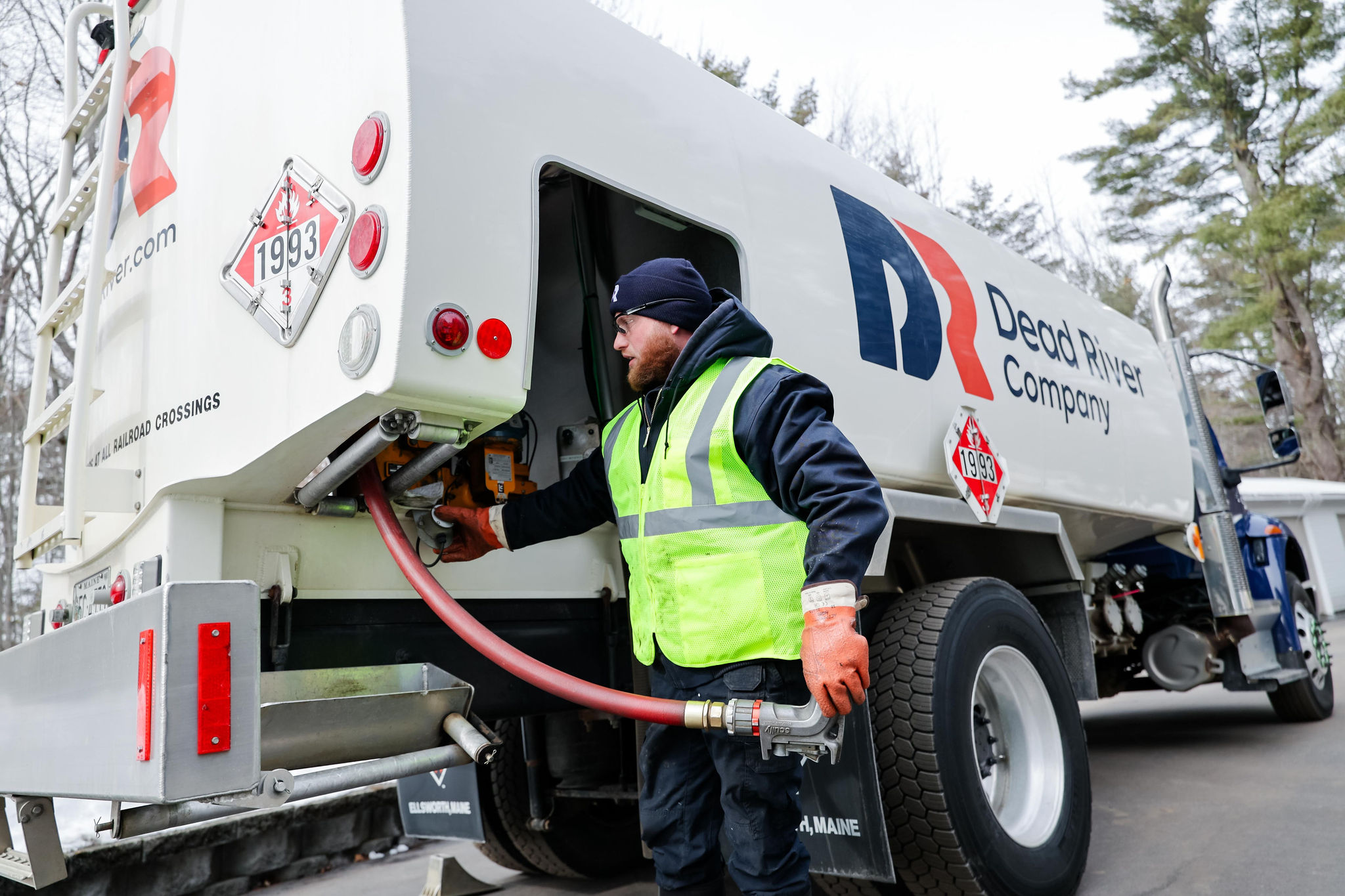
Ordering the right amount of heating oil for your home means balancing comfort, cost, and convenience. Order too little and you risk running out during a cold snap. Order too much and you’re tying up funds that could be used for other important expenses.
Most residential homes in the Northeast should order heating oil when their tank reaches about a quarter full, which typically means between 100 and 200 gallons at a time depending on tank size and seasonal demand. This approach helps you avoid emergency runouts while keeping your costs predictable throughout the winter months. At Dead River Company, we understand that every home is different. Your heating oil needs depend on factors like your home's size, insulation quality, thermostat settings, and how cold the weather gets in your area. This guide will walk you through how to calculate your usage, when to schedule deliveries, and how to make your heating oil last longer.
How Much Heating Oil Should I Order?
While the quarter-tank mark is a great place to start for homeowners in cold-weather regions like New England, the actual number of gallons you'll need depends on your specific setup. To get the best value on your delivery and avoid a runout, you need to look at your tank capacity, current fuel level, outdoor temperatures, and how quickly your home uses fuel.
Factors That Affect Home Heating Oil Usage
How much heating oil you use depends on a few things. The size of your house is a big one—a 2,000-square-foot home will usually burn more fuel than a smaller 1,200-square-foot home. Your insulation matters a lot, too. Homes that are well-insulated hold onto heat better, so they don’t have to burn as much oil to stay warm. The temperature outside is another big factor. When it drops below 20°F, your furnace has to work much harder and burns more oil than it does on milder days. Your heating system's efficiency matters too—newer models are much better at turning fuel into heat than older ones. Your thermostat settings also change how much heating oil you use. Keeping it at 68°F instead of 72°F can save you a lot of fuel. Even the number of people in your home and how warm they like it will change your daily usage. Finally, the age and condition of your system determine how efficiently it burns #2 heating oil or ultra-low sulfur heating oil. A well-maintained heating system runs more efficiently, which helps you avoid wasting fuel.
How to Estimate Heating Oil Needs Based on Tank Size and Gauge
Most residential homes have either a 275-gallon tank or a 550-gallon tank. Your fuel tank gauge shows remaining oil as a fraction—full, 3/4, 1/2, 1/4, or empty. A 275-gallon tank at the 1/4 mark contains roughly 69 gallons.
When checking your oil tank gauge, order enough gallons of heating oil to bring your tank to at least 3/4 full. For a 275-gallon tank at 1/4 capacity, you'd order approximately 140 gallons. This gives you a comfortable buffer without overfilling.
Here's a quick reference for common order amounts:
| Current Tank Level | Tank Size | Gallons to Order (to 3/4 full) |
|---|---|---|
| 1/4 | 275-gallon | ~140 gallons |
| 1/2 | 275-gallon | ~70 gallons |
| 1/4 | 550-gallon | ~280 gallons |
| 1/2 | 550-gallon | ~140 gallons |
Your heating oil tank gauge gives you a visual reading, but some homeowners prefer automatic delivery services that monitor usage and schedule deliveries. If you prefer to manage your own deliveries, many companies have an order minimum of 100 gallons, so keep that in mind.
When to Order Heating Oil to Avoid Running Out
You should order more heating oil when your tank hits the 1/4 mark. This gives you enough fuel to stay warm while you wait for your delivery, even if there are weather delays or a sudden cold snap.
Waiting until your tank is nearly empty creates problems. Sediment settles at the bottom of heating oil tanks, and when fuel levels drop too low, this sediment can clog your system. Running completely out of oil requires your system to be primed and restarted, which often means a service call.
Weather plays a critical role in when to order. During the coldest parts of winter in Maine, New Hampshire, Vermont, and Massachusetts, delivery schedules can fill up quickly. It’s smart to order even earlier when it’s freezing outside because you’ll burn through fuel much quicker.
Many people choose automatic delivery to make things easier. This option means Dead River Company tracks the weather and your typical usage and schedules a delivery before your tank ever gets too low.
How Long Does a Tank of Heating Oil Last?
In cold areas, a full 275-gallon tank usually lasts about 4 to 6 weeks during the winter. But how fast you burn through it really depends on the weather and your home.
During the coldest months (January and February), homes can use 6 to 10 gallons of heating oil per day. Milder winter weather in November or March might reduce consumption to 2 to 4 gallons daily. A well-insulated 1,800-square-foot home with an efficient heating system might use 800 to 1,000 gallons per heating season.
Larger homes or those with poor insulation can use a lot more. A 2,500-square-foot home with average insulation might consume 1,200 to 1,500 gallons throughout the winter season.
It’s a good idea to watch your tank gauge to see how fast the level drops when it gets cold. This helps you guess when you'll need your next delivery. You can also ask Dead River Company for your "usage history" to see exactly how much you used in the past.
Getting the Most Out of Your Heating Oil Delivery
Getting the most value from your heating oil delivery involves choosing the right delivery method, timing your orders based on real usage patterns, and taking advantage of pricing strategies that protect you from runouts while keeping costs down.
Smart Ordering Strategies to Save Money and Ensure Safety
Order larger quantities when heating oil prices dip during warmer months. Many homeowners pre-buy oil in late spring or summer when demand is lower and prices tend to be more favorable.
Key ordering strategies include:
- Monitor price trends in your region and order when rates drop
- Fill your tank completely rather than requesting partial deliveries
- Join a budget plan that spreads heating costs across the year
- Order at a quarter (1/4 mark) capacity to maintain safety margins
Never let your tank drop below the quarter mark. Running out of oil can cost you hundreds in emergency delivery fees, system restart charges, and potential repairs if sediment clogs your fuel lines.
Consider Dead River Company's payment plans if large lump-sum payments strain your budget. These programs let you pay consistent monthly amounts based on estimated annual usage, making heating costs more predictable throughout the year.
Whether it's your fuel, your equipment, or your service needs, our goal is always the same: lasting comfort and peace of mind. You can count on the experts at Dead River Company to show up when you need us, because New England weather doesn't quit, and neither do we. Have more questions? Contact us to talk to a local expert.
