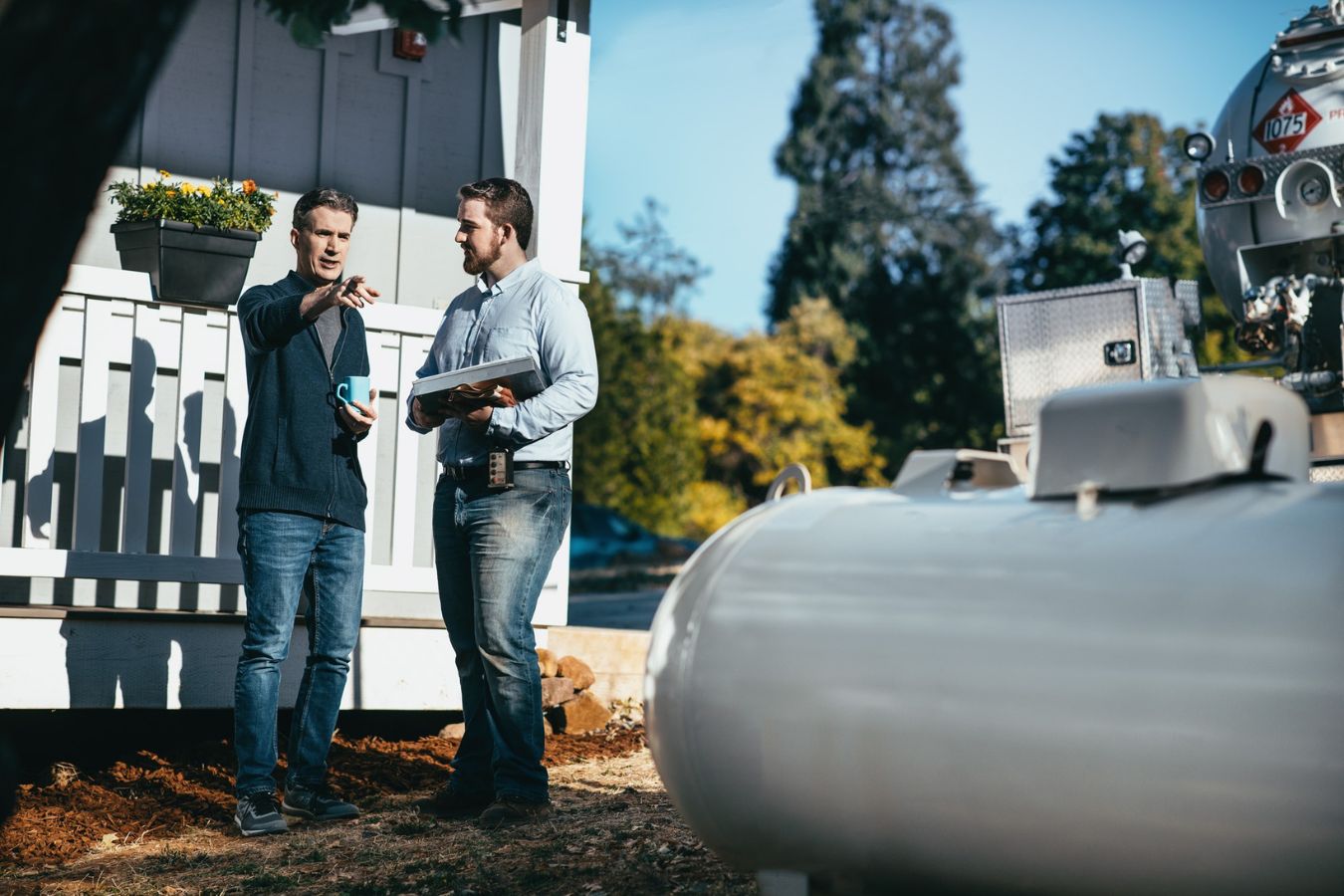
More and more homeowners across New England are taking a look at propane, and since you’re reading this—you’re probably one of them. It’s no secret that heating oil has been a reliable go-to for generations, but propane brings some pretty great extras to the table—like the ability to run a gas range, clothes dryer, and cozy fireplace, all from the same tank.
Whether you’re worried about your aging heating oil equipment making it through another winter or just curious about how consolidating your energy needs might work, getting a handle on the conversion process is a great place to start.
Sorting all this out can feel like a lot, but the experts here at Dead River Company can help you figure out the right setup for your home. In this guide, we’ll cover what actually changes when you switch fuels, who could benefit the most, and what you might expect for costs.
Key Steps and Considerations for Oil to Propane Conversion
Transitioning your home to propane involves a few moving parts, from evaluating your current system to getting your new equipment and delivery schedule set up.
Who Should Consider Converting to Propane
If you live somewhere with reliable suppliers—and across Northern New England, we’ve got you covered—you’re in a good spot for conversion. It’s especially worth looking into if your heating equipment is hitting that 15–20 year mark or just keeps breaking down.
For homes without a natural gas line, propane is often the best bet for getting that same versatility and efficiency. And if you’re already planning other home upgrades, it might make sense to bundle a propane conversion with your new kitchen appliances, water heater, or generator. Having everything running off the same tank makes life simpler and can help you budget.
Plus, if you care about emissions, propane burns cleaner than heating oil with fewer particulates and less carbon per BTU.
Step-by-Step Conversion Process
Switching over to propane can be a big project, here’s the whole thing from start to finish:
- Professional Assessment: First up, one of our expert technicians will visit your home to see if your current setup can handle a burner conversion or if you’re better off replacing the whole thing.
- Choosing the Right Equipment: Burner conversion means swapping out the oil burner for one that works with propane. This only makes sense if your furnace isn’t that old and still has some life left. If it’s old or just not compatible, you’re looking at a new propane furnace instead.
- Propane Tank Installation: Next, we’ll get your new tank set up. Most homes require a 250–500 gallon above-ground tank, though some homeowners choose a larger underground tank that’s out of sight. Usually, we own and maintain the tank as part of your delivery agreement, so that’s one less thing for you to worry about.
- Dealing with Your Oil Tank: Your old tank will need to be handled according to local regulations—whether that’s being cleaned, removed, or filled. Some towns require a professional to handle the removal and verify the soil is clear.
- Final Testing and Tuning: Once everything is hooked up, our techs will test the entire system for leaks, verify the combustion is dialed in, and set your thermostat to ensure you’re getting the most out of your fuel from day one.
Propane Equipment and Furnace Options
Your first big choice is whether to adapt your current setup or get a whole new system. While burner conversions can be cheaper up front, they really only make sense for furnaces under 10 years old that are still in great shape. For long-term savings, high-efficiency propane furnaces (90-98% AFUE) are the way to go—these condensing units squeeze more heat from every gallon and can even qualify for rebates.
Ultimately, what you pick depends on your home’s heating needs, ductwork, and budget. Two-stage or modulating burners are a nice upgrade for comfort and efficiency over basic single-stage models. Sizing your propane tank to fit your usage is also really important—a correctly sized tank can mean fewer deliveries and more peace of mind.
Permits, Inspections, and Code Compliance
Most places require permits for furnace swaps and propane tank installation. Your contractor usually handles the paperwork, but it’s your job to make sure everything’s above board.
Permits and inspections are there to make sure everything’s safe — right distances from buildings, proper venting, that kind of thing. Propane tanks have to be set back from property lines and ignition sources by law.
Inspectors will check venting, gas line sizing, shut-off valves, and leak detection before you’re good to go.
Oil tank removal can mean extra permits, especially for underground tanks. Each New England state has its own rules for getting rid of old tanks and checking for contamination.
Whether Dead River Company is handling the full installation from start to finish or just helping you get your new propane system up and running, we’ll work with you to make sure your conversion is done right and meets all local requirements.
Costs, Incentives, and the Benefits of Propane Heating
Switching to propane is a significant investment, but financing and rebates can help. After that, you’ll probably notice higher efficiency, cleaner burning, more stable per gallon pricing, and the steady convenience of a reliable delivery schedule from a trusted propane supplier.
Cost Breakdown and Financing Options
All-in, converting from oil to propane usually runs $5,000 to $12,000, depending on what you’re starting with and whether you need a whole new furnace or just a conversion kit. If your oil furnace is compatible, a conversion kit plus labor lands in the $2,000 to $4,500 range. Going with a new propane furnace adds another $2,500 to $6,000 for equipment and install.
You’ll need a propane tank, too. Dead River Company leases them out for $50 to $150 a year, or you can buy one — above-ground tanks start around $1,500. Underground tanks cost more, but they’re out of sight.
| Typical Conversion Costs: | |
| Component | Price Range |
| Conversion kit + installation | $2,000 - $4,500 |
| New propane furnace + installation | $4,500 - $9,000 |
| Tank lease (annual) | $50 - $150 |
Potential Incentives and Rebates
There are a surprising number of programs that can shave down your conversion costs. High-efficiency propane furnaces (90%+ AFUE) might get you a federal or state tax credit. The DSIRE database is a good resource for what’s available in Maine, New Hampshire, Vermont, and Massachusetts.
The Propane Education & Research Council keeps tabs on manufacturer rebates — often in the $300 to $1,000 range for qualifying furnaces and boilers. Some utilities and regional agencies add their own incentives for ditching oil.
Don’t forget to ask Dead River Company about our seasonal deals too. These change all the time, so it’s worth checking what’s current and if you can stack them with government rebates.
Long-Term Savings and Environmental Advantages
Propane heating systems usually score 90% to 98% AFUE, while older oil furnaces can stay stuck at 75–85%. That extra efficiency means you’ll burn less fuel and save money year after year. Propane’s also cleaner — lower carbon emissions, basically no soot or sulfur dioxide.
Dead River Company has a variety of different payment plans to help manage costs and budget over the season. Maintenance is easier, too. Propane furnaces don’t need as much cleaning or as many filter swaps as oil systems.
Choosing a Reliable Propane Supplier and Ensuring Delivery
Your relationship with your propane provider is a big deal—arguably just as important as the hardware itself. At Dead River Company, we’ve been serving Northern New England for generations, and we take it personally when it comes to keeping our neighbors comfortable.
That’s why we offer tools like automatic delivery, where we track your usage and the weather so you’re not scrambling for a fill-up in the middle of January.
Whether it's your fuel, your equipment, or your service needs, our goal is always the same: lasting comfort and peace of mind. You can count on the experts at Dead River Company to show up when you need us, because New England weather doesn't quit, and neither do we. Have more questions? Contact us to talk to a local expert.
